A wax component with a special effect
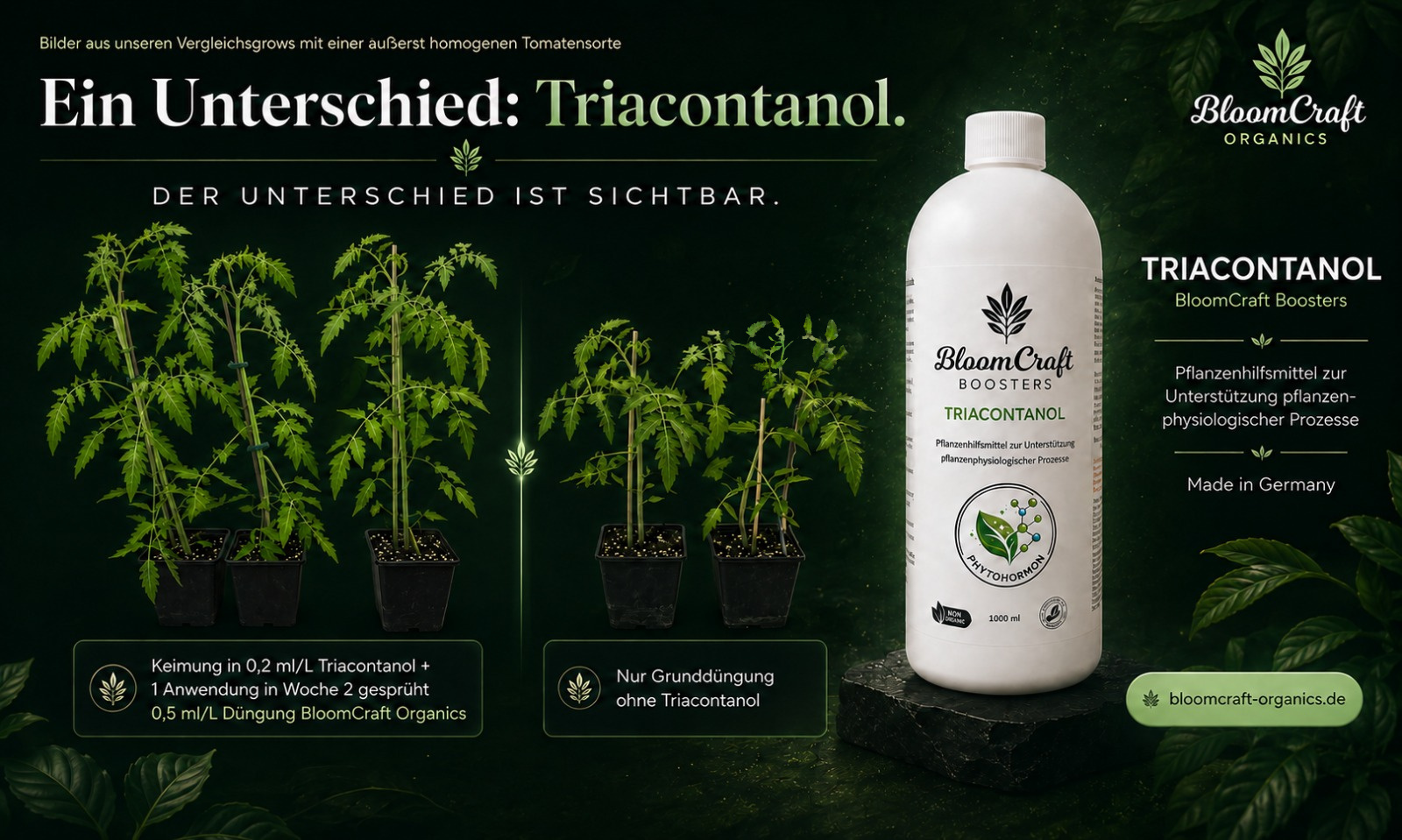
Triacontanol is a long-chain, naturally occurring fatty alcohol found, among other places, in the wax layers of many plants, for example on alfalfa leaves. 1 Plant physiology research has studied it for decades because, even at extremely low concentrations, studies show measurable effects on growth processes, among others on chlorophyll content, photosynthetic performance and cell division. 2
What makes it special: Triacontanol behaves differently from a classic nutrient that the plant "consumes" in larger quantities. It acts more like a signalling substance that triggers or reinforces certain physiological processes. That's exactly why, unlike with nitrogen, phosphorus or potassium, the tiniest amounts are enough here.
Why "less is more" is literally true here
With classic fertilizers, most people instinctively think more nutrient means more growth. With biostimulants like Triacontanol, it works differently. The effective concentrations lie in the range of a few ppb (parts per billion). Overdosing brings no additional benefit here and can even weaken the desired effect. 2
That's also one of the reasons why our Academy puts so much emphasis on clean dosing: with boosters like Triacontanol, precision matters more than quantity. If you're unsure, you'll always find the right dosage in our dosage calculator.
Strong partners from the new line
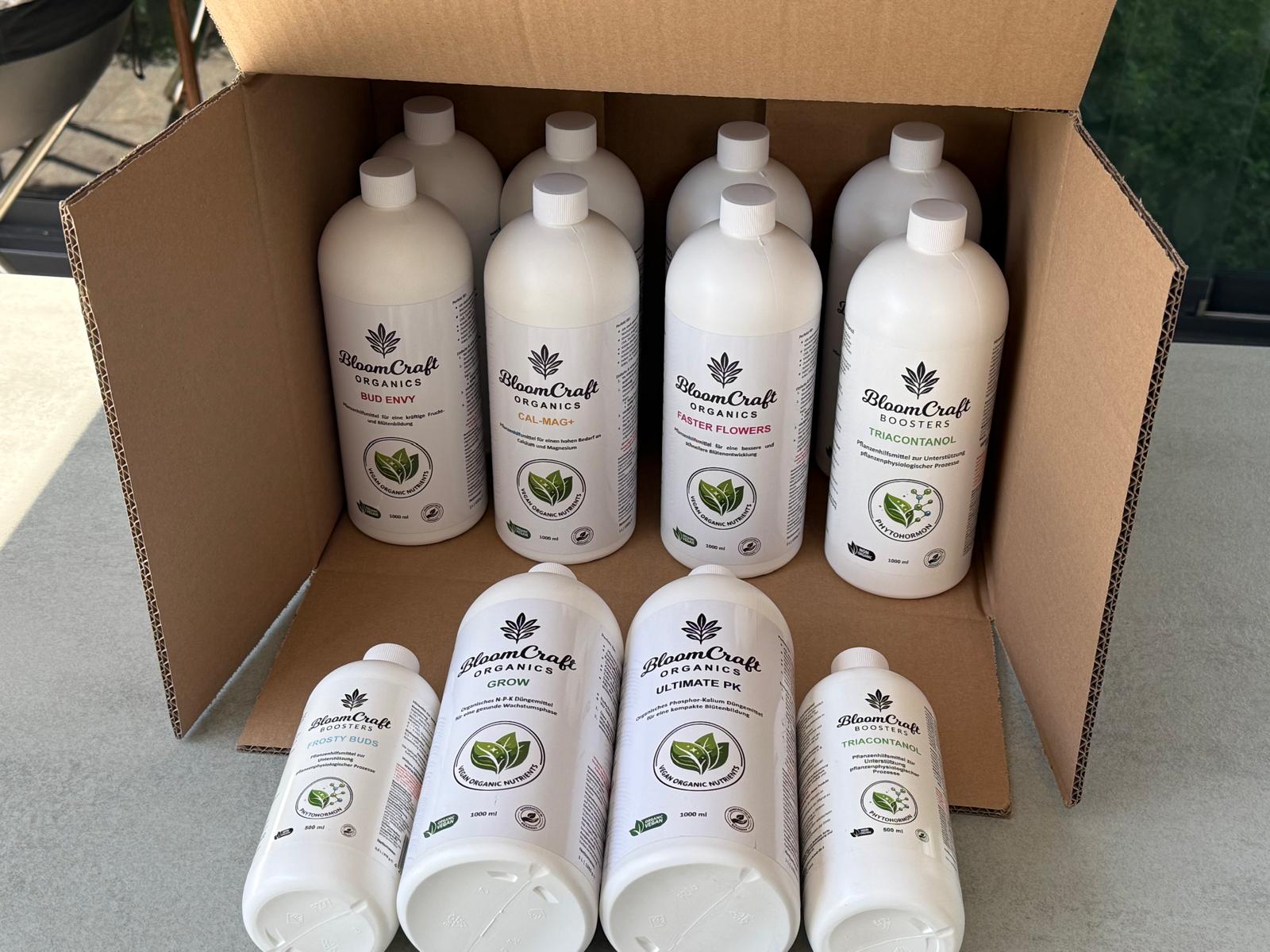
In this year's field test, Triacontanol doesn't run alone: Clones takes care of the start at the cutting stage, Roots supports strong root development, and Grow additionally accompanies the plants as base nutrition during the vegetative phase. Together with Triacontanol, this creates a finely tuned interplay of base feeding, root development and targeted physiological impulse, tested at many different locations across Germany.
Where Triacontanol is used in our field test
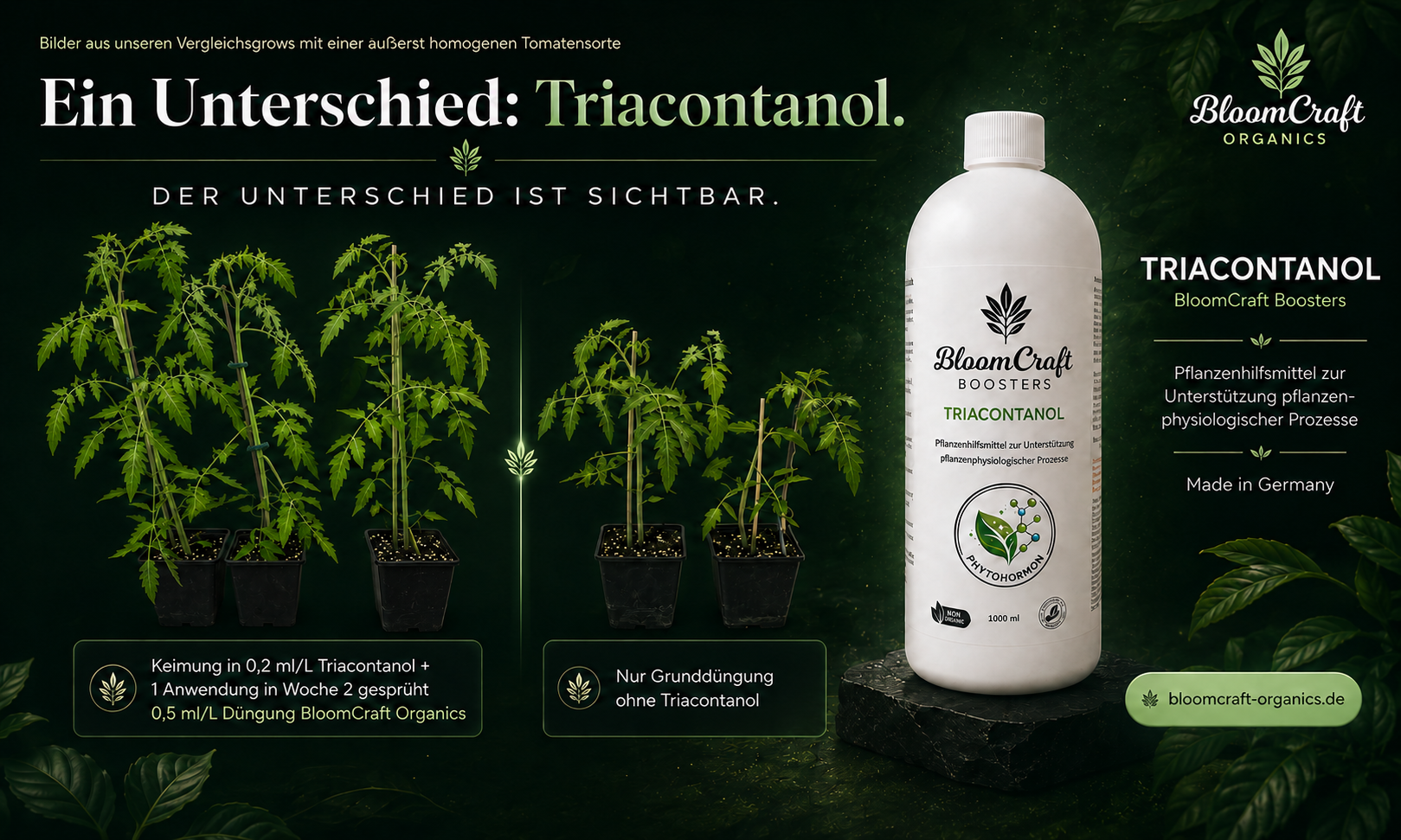
We use Triacontanol specifically during the vegetative growth phase, where it's about building a strong, well-branched plant structure that will later carry flowers and fruit. A stable vegetative foundation is ultimately the basis for everything that follows.
Important to us: Triacontanol doesn't replace base fertilization. It specifically complements an already balanced nutrient supply exactly where plant physiology can use some extra support.
What's next
As soon as the vegetative phase transitions into flowering and fruit set, another booster takes the lead role in our field test. In the next post, we'll take a detailed look at Frosty Buds, our booster for healthier growth and a highly efficient flowering booster for the final weeks.
Sources
The studies cited examine Triacontanol in general plant physiology, not specifically in cannabis.
- Ries, S.K., Wert, V., Sweeley, C.C. & Leavitt, R.A. (1977). Triacontanol: A New Naturally Occurring Plant Growth Regulator. Science, 195(4284), 1339–1341. doi.org/10.1126/science.195.4284.1339
- Naeem, M., Khan, M.M.A. & Moinuddin (2011). Triacontanol: a potent plant growth regulator in agriculture. Journal of Plant Interactions, 7(2), 129–142. doi.org/10.1080/17429145.2011.619281
Grow naturally. Cultivate consciously. Unlock your potential.
BloomCraft Organics – Grow your Vision. 🌿